Common Whey Protein Myths You Should Stop Believing
-
 Abhinav
 - Posted on
- 0 comments

Let’s be honest. If you’ve ever considered taking whey protein in India, you’ve almost certainly been warned by someone — a parent, a relative, a well-meaning friend — that it’s “basically a steroid,” that it’ll ruin your kidneys, or that it’s only for professional bodybuilders.
Indian fitness culture is full of these assumptions. Some come from genuine caution. Some come from watching too many cautionary tales online. And some are so deeply embedded in gym folklore that even experienced lifters repeat them without questioning the source.
The problem? These myths don’t just cause confusion — they actively stop people from using a supplement that is safe, scientifically validated, and genuinely useful for anyone who trains regularly.
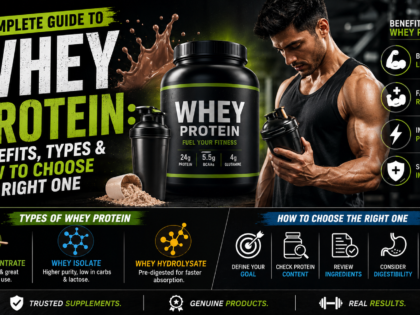
So let’s go through the most common whey protein myths one by one and replace each with what the evidence actually says. For a complete, science-backed foundation on how whey protein works, what it contains, and which type suits your goal, visit our Complete Guide to Whey Protein: Benefits, Types & How to Choose.
Myth #1: “Whey Protein Is a Steroid”
The Truth: Whey protein is derived from milk. That’s it. When milk is used to produce cheese, it separates into a solid curd and a watery liquid — that liquid is whey. After filtration and drying, it becomes the powder you mix into your shaker bottle.
There are no synthetic hormones in whey protein. No anabolic steroids. No banned substances — provided you’re buying a genuine product from a verified seller. Categorising whey protein as a steroid is the nutritional equivalent of calling a glass of milk a performance-enhancing drug.
The confusion largely stems from associating anything that helps build muscle with steroids. That’s a false equation. Muscle growth requires protein, progressive training, adequate sleep, and time. Whey protein provides one of those variables — good-quality protein — in a convenient form. Nothing more.
Myth #2: “It Will Make You Bulky Overnight”
The Truth: Building noticeable muscle mass is a slow, deliberate process. It takes months of consistent, progressive weight training alongside adequate calorie and protein intake. A single scoop of whey protein does not override your body’s physiology.
This myth particularly discourages women from using protein supplements. The concern is understandable — nobody wants to wake up looking like they’ve been training for a competitive bodybuilding show. But here’s the reality: women have significantly lower testosterone levels than men, which is the primary hormonal driver of large-scale muscle hypertrophy. Even female athletes who train intensely and eat strategically for years don’t “bulk up” in the dramatic way this myth implies.
What whey protein actually does — for both men and women — is support lean muscle development: the kind that makes you look more toned, defined, and proportionate. Not inflated.
Myth #3: “Whey Protein Damages Your Kidneys”
The Truth: This is one of the most persistent health myths in fitness — and it has been studied extensively. The conclusion, repeated across multiple large-scale reviews, is clear: high protein intake does not damage healthy kidneys.
The original concern came from research on patients who already had chronic kidney disease. For those individuals, dietary protein does need to be carefully managed because compromised kidneys struggle to process waste products from protein metabolism. That specific finding was — incorrectly — generalised to everyone.
For people with normal, healthy kidney function, consuming protein in the ranges recommended for active individuals (1.6–2.2g per kg of bodyweight) has not been shown to cause kidney damage in credible scientific literature. If you have a diagnosed kidney condition, consult your doctor before making significant dietary changes. For everyone else — this myth simply isn’t supported by the evidence.
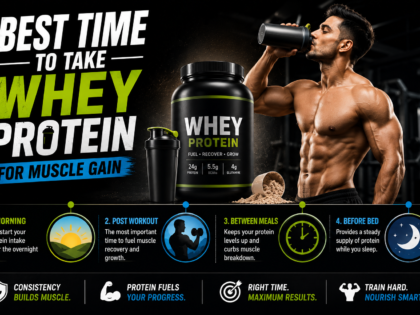
Myth #4: “You Must Take It Within 30 Minutes of Training or It Won’t Work”
The Truth: The “30-minute anabolic window” became one of the most hyped concepts in sports nutrition — and it has since been significantly revised by more comprehensive research.
A widely cited 2013 meta-analysis published in the Journal of the International Society of Sports Nutrition concluded that the window for effective post-workout protein consumption is considerably wider than 30 minutes. For most people training in a fed state (i.e., you ate a meal a few hours before training), the effective window extends to 1–2 hours post-workout with no meaningful loss in muscle protein synthesis.
Does post-workout protein timing matter? Yes, to some degree — consuming quality protein after training supports muscle repair and reduces breakdown. But the specific 30-minute rule is far more rigid than the science justifies. Missing your exact window by 20 minutes will not erase your gains.
What matters significantly more is your total daily protein intake. If you’re consistently hitting your protein targets spread across the day, you will see results — regardless of whether your post-workout shake happened at 6:42 PM or 7:15 PM.
Myth #5: “Natural Food Is Always Better Than Supplements”
The Truth: Here’s the thing — whey protein is natural food. It’s derived from milk, which has been part of the human diet for thousands of years. The powder form is simply a processed, concentrated version of a naturally occurring protein source. Calling it unnatural is a stretch.
More importantly, this myth sets up a false opposition. Whole foods are foundational and should make up the bulk of your diet — no serious nutritionist would argue otherwise. But supplements exist to fill genuine gaps, not replace meals. If your diet is solid but you’re still falling short of your daily protein targets because of lifestyle, time, or appetite constraints — a whey protein shake is a smart, practical solution.
Think of it this way: nobody questions whether it’s “natural” to cook your chicken rather than eating it raw, or to drink a glass of milk rather than getting protein only from solid food. Processing and convenience are not the enemies of good nutrition.
Myth #6: “Whey Protein Causes Hair Loss”
The Truth: There is no robust, peer-reviewed evidence establishing a direct causal link between whey protein consumption and hair loss. This myth likely has a few possible origins.
First, confusion with anabolic steroids — which can affect DHT (dihydrotestosterone) levels in genetically predisposed individuals and potentially accelerate male pattern baldness. Since some people associate whey with steroids (see Myth #1), the hair loss concern follows.
Second, there is some research suggesting creatine — a separate supplement often taken alongside whey — may elevate DHT levels, though this finding is not definitive. Creatine and whey are two different things, often confused by beginners.
Standard whey protein, consumed as directed, contains no compounds with established links to hair loss. If you’ve noticed hair fall after starting a new supplement routine, consider other variables: stress levels, sleep quality, nutritional deficiencies, hormonal changes, or other products introduced at the same time.
Myth #7: “Whey Protein Is Only for Bodybuilders”
The Truth: Whey protein is a high-quality, complete protein source. Its benefits — supporting muscle repair, reducing post-workout soreness, helping meet daily protein targets, and preserving lean muscle during fat loss — apply to virtually anyone who exercises with any regularity.
You don’t need to be competing in a physique show to benefit from adequate protein intake. A 55-year-old woman doing three strength sessions per week benefits from sufficient protein just as much as a 25-year-old male powerlifter. A college student doing recreational football benefits from it. A runner focused on endurance benefits from it.
Whey protein is a tool for anyone whose lifestyle or training demands more protein than their regular diet conveniently provides.
Myth #8: “More Protein Means More Muscle — So Take as Much as Possible”
The Truth: Protein intake for muscle gain has a practical ceiling. Research suggests that consuming more than approximately 2.2–2.4g of protein per kg of bodyweight per day provides diminishing returns for muscle building in most individuals. Beyond that threshold, excess protein is simply used as energy — it doesn’t translate to faster or greater muscle growth.
Taking three or four whey protein scoops a day when one would suffice doesn’t accelerate your results. It just adds unnecessary calories and costs you more money. Calculate your personal protein target based on your weight and training intensity, meet that target efficiently through food and supplementation, and leave it there.
Myth #9: “Cheap Protein Is Just as Good as Premium Brands”
The Truth: In most product categories, budget-friendly options perform comparably to premium ones. Whey protein in India is a significant exception to that rule.
The Indian supplement market has well-documented issues with counterfeit and adulterated products — particularly in unregulated online marketplaces. Practices like amino spiking (adding cheap, non-functional amino acids to inflate the protein reading on lab tests), under-dosing, and outright counterfeiting are not rare edge cases.
A cheaper, fake product might claim 25g of protein per scoop but deliver 10g of actual, complete protein. You’re not saving money — you’re paying for a product that doesn’t work, and potentially consuming something that hasn’t been properly tested or manufactured.
This is why buying from authorised, verified sellers matters. Explore our full range of whey protein supplements at Kapoor Medical Hall — every product is sourced through legitimate distributor channels, so what’s on the label is what’s in the tub.
Myth #10: “If You Stop Taking Whey Protein, Your Muscle Will Turn to Fat”
The Truth: Muscle and fat are two completely different types of tissue. One cannot convert into the other — physiologically, this is impossible. This myth is a biological misunderstanding, not a real phenomenon.
What can happen if you stop training and eating sufficient protein is that your muscles gradually reduce in size through a process called atrophy — the muscle tissue isn’t maintained because the stimulus and nutrition to maintain it are no longer there. Separately, if your overall calorie intake stays the same while your activity level drops, you may gain body fat. These two things happening simultaneously can create the appearance of muscle “turning to fat” — but that’s a coincidence of timing, not a biochemical conversion.
The Real Takeaway
Misinformation in fitness is expensive — in terms of money spent on the wrong products, time wasted second-guessing supplements that actually work, and results left on the table because of unfounded fear.
Whey protein, purchased from a trustworthy source and used as part of a consistent training and nutrition plan, is one of the most safe, effective, and well-researched supplements in existence. It doesn’t deserve the reputation it’s been given in popular Indian fitness culture.
Base your decisions on evidence, not gym-floor gossip.
If you’re ready to explore genuine, verified whey protein options, visit our whey protein range at Kapoor Medical Hall — and if you’re still working out which type is right for you, our Complete Guide to Whey Protein has everything you need to make a confident, informed decision.