Complete Guide to Whey Protein: Benefits, Types & How to Choose the Right One
-
 Abhinav
 - Posted on
- 0 comments

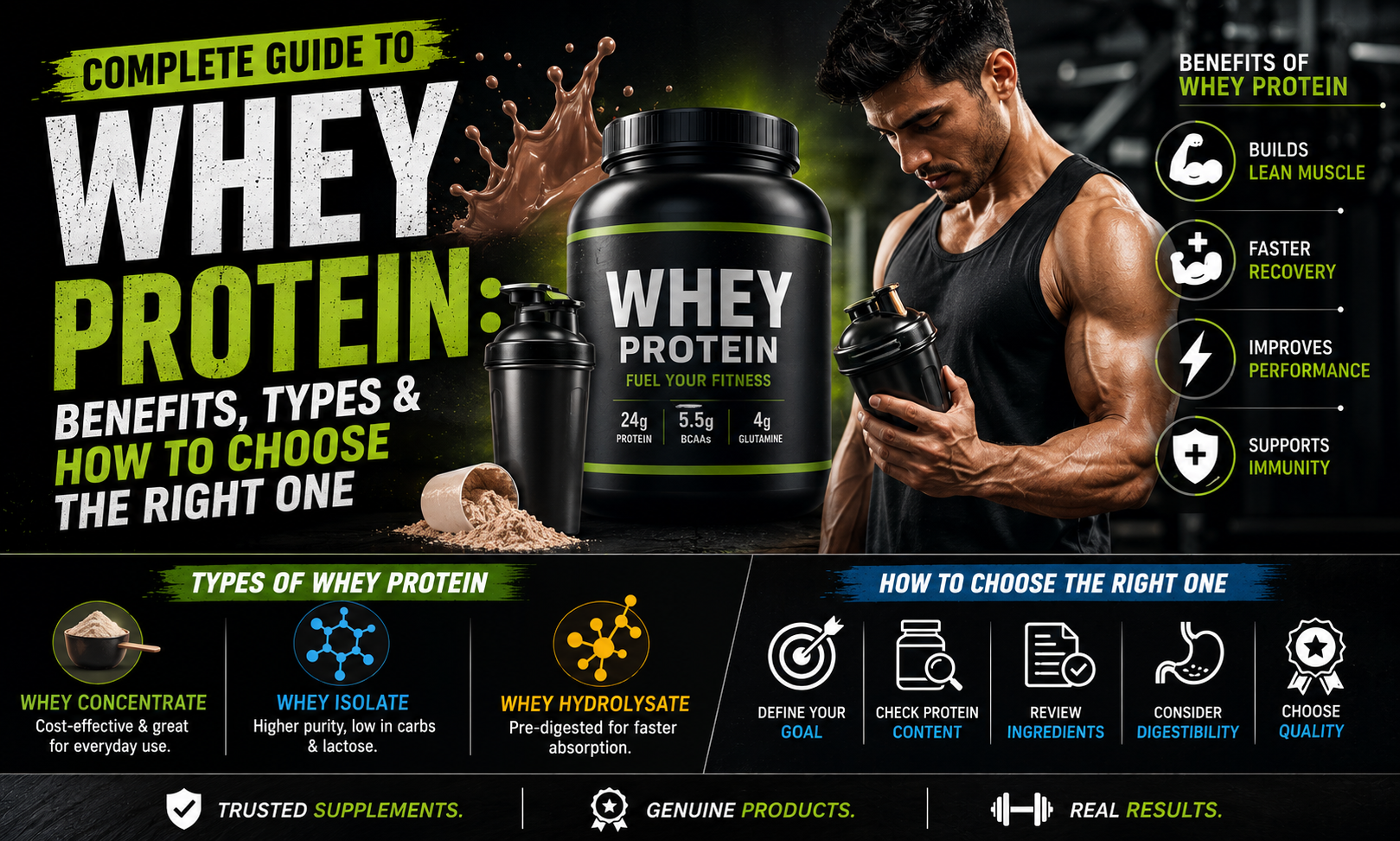
If you’ve recently stepped into a gym, or even just started looking up how to get in shape, you’ve probably heard three words thrown around more than anything else: whey protein.
Your trainer swears by it. Your gym buddy drinks it post-workout. Every supplement store has an entire wall dedicated to it. And yet, for someone just starting out, it can feel genuinely overwhelming. Which type do you buy? Is it safe? Do you even need it? Will it make you bulky?
In India especially, the confusion runs deeper. There’s the fear of fake supplements flooding the market, the concern about side effects, and the age-old myth that protein powders are “steroids in disguise.” Families worry. Beginners overthink. And as a result, many people either buy the wrong product or avoid this incredibly useful supplement altogether.
This guide is here to fix that.
Whether you’re a 22-year-old starting your fitness journey, someone trying to drop fat while holding onto muscle, or simply a curious buyer trying to make a smart, informed decision, this is the only whey protein guide you’ll need to read.
We’ll cover what it is, how it actually works, the different types, when and how much to take, common myths, and how to make sure you’re buying something real and effective.
Let’s get into it.
What Is Whey Protein?
Whey protein comes from milk. When milk is processed to make cheese, it separates into two parts: a solid portion (used to make cheese) and a watery liquid left behind. That liquid is whey. And within that liquid is one of the most complete, fast-absorbing protein sources known to sports nutrition.
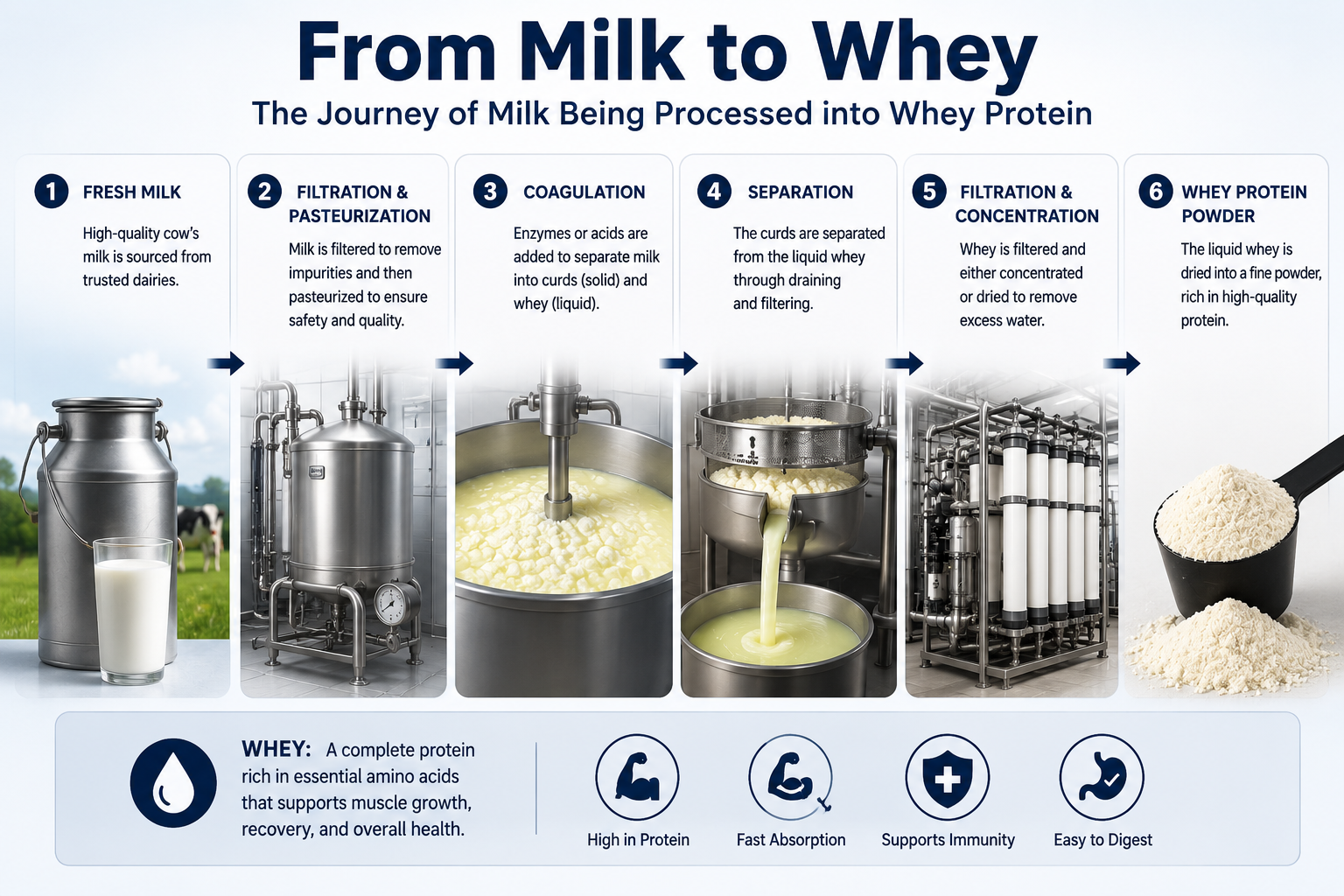
Whey is a complete protein, meaning it contains all nine essential amino acids, the ones your body cannot produce on its own and must get from food. It’s particularly rich in leucine, the amino acid most responsible for switching on muscle protein synthesis (essentially the process your body uses to build and repair muscle tissue).
Once the liquid whey is filtered, processed, and dried, it becomes the powder you scoop into your shaker bottle. Simple enough, right?
Moreover, What makes whey stand out from other protein sources, like soy, pea, or casein, is how quickly your body absorbs it. Within 60–90 minutes of consumption, whey’s amino acids are circulating in your bloodstream, reaching your muscle cells exactly when they need it most. That’s why it’s so effective as a post-workout supplement.
Whey Protein vs. Regular Food Protein: Is There a Difference?
Nutritionally speaking, a gram of protein from whey is no different from a gram of protein from chicken or eggs. Your body doesn’t care about the source, it breaks down protein into amino acids either way.
What whey protein offers is convenience and concentration. A single 30g scoop of whey gives you approximately 24–27g of protein with minimal fat and carbohydrates. To get the same from food, you’d need roughly three eggs, or about 100g of chicken breast. Both work, but if you’re already full from lunch and your post-workout window is ticking, a quick protein shake is a whole lot more practical.
How Whey Protein Supports Muscle Growth
Here’s the science made simple.
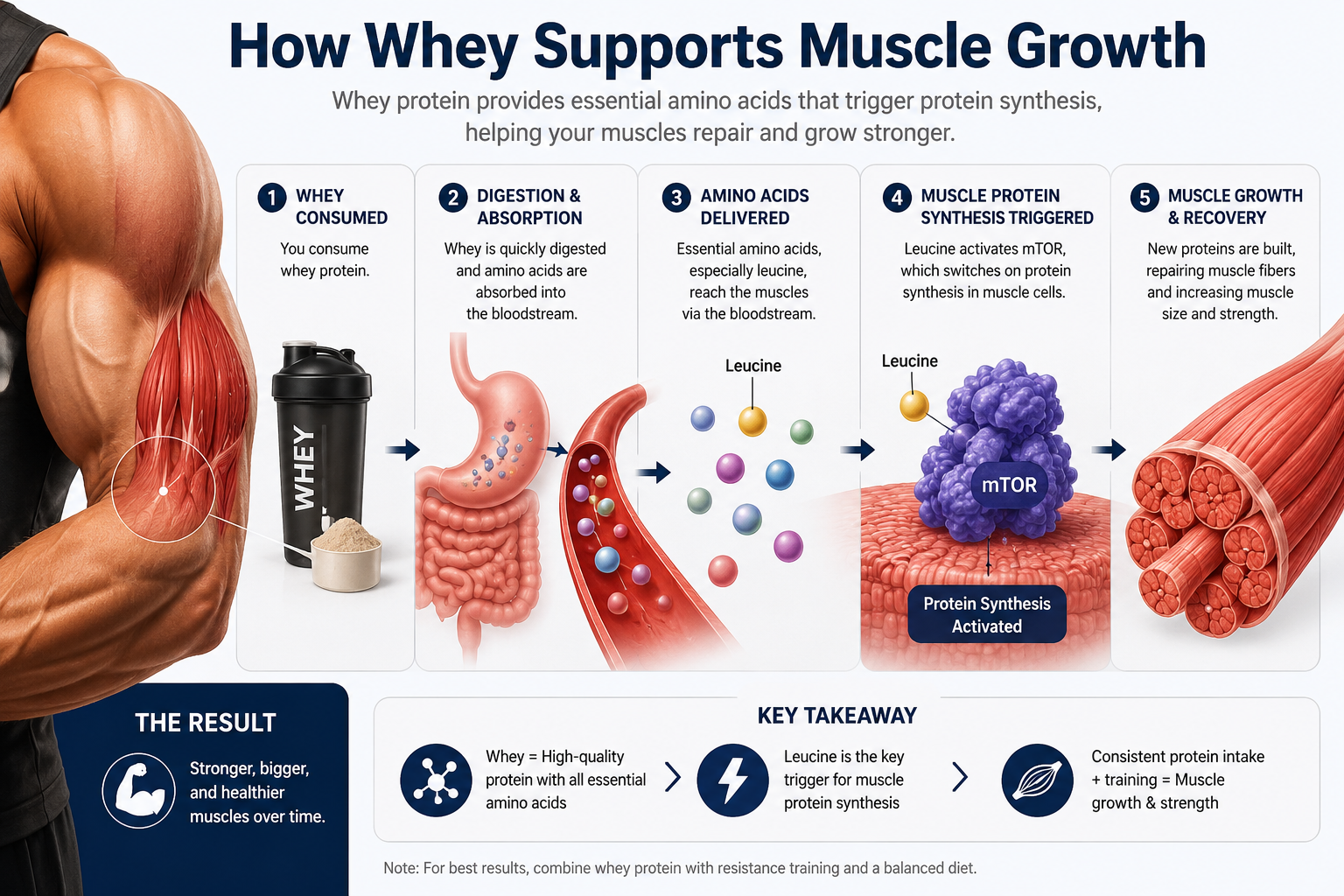
Every time you lift weights or train intensively, you create microscopic tears in your muscle fibres. Your body then repairs these tears, and in doing so, builds the fibres back slightly thicker and stronger. This process is called muscle protein synthesis (MPS), and it is literally how muscle growth happens.
For MPS to work optimally, your body needs a steady supply of amino acids, specifically leucine, which acts as a biological “trigger” for the repair process. Whey protein is one of the richest natural sources of leucine, containing roughly 10–11% leucine by weight, which is significantly higher than most other protein sources.
Additionally, research has consistently shown that consuming 20–40g of high-quality protein within a few hours of training significantly enhances MPS compared to training without adequate post-workout protein. Whey protein, because of its speed of absorption and leucine content, is particularly well-suited for this window.
Beyond muscle building, whey also supports:
- Muscle recovery – reducing soreness and helping you train harder the next session
- Muscle preservation – especially important when you’re in a calorie deficit for fat loss
- Satiety – high-protein intake is well-established to reduce hunger and calorie intake over the day
Whey Protein Benefits: More Than Just Muscle
People associate whey protein almost exclusively with bodybuilding, but its benefits extend well beyond just getting bigger.
1. Supports Lean Muscle Growth
This is the headline benefit. Consistent protein intake combined with resistance training leads to more muscle mass over time. Whey, being fast-digesting and amino acid-rich, is excellent for this.
2. Aids Fat Loss Without Muscle Loss
When you’re eating in a calorie deficit to lose fat, your body can start breaking down muscle for energy – a process called catabolism. Adequate protein intake, especially from high-quality sources like whey, helps prevent this. You lose fat, not muscle. That’s the goal.
3. Speeds Up Recovery
DOMS (delayed onset muscle soreness) is real. Whey protein has been shown in multiple studies to reduce post-exercise muscle damage markers, which means you recover faster and can get back to training sooner.
4. Helps Meet Daily Protein Targets
For most active individuals, getting 1.6–2.2g of protein per kg of bodyweight through food alone is genuinely difficult. Whey protein fills that gap without adding significant calories from fat or carbohydrates.
5. Convenient, Versatile, and Cost-Effective
Per gram of protein delivered, whey is one of the most cost-effective options available. It mixes easily, tastes reasonably good, and can be added to smoothies, oats, or baked goods; making it the most practical protein supplement on the market.
6. May Support Immune Health
Whey contains immunoglobulins and lactoferrin, bioactive compounds that play a role in immune function. This isn’t a reason to take whey instead of eating well, but it’s a genuine bonus for active individuals who put their bodies under regular physical stress.
Types of Whey Protein Explained
Not all whey protein is the same. The key difference lies in how much processing the whey liquid goes through before becoming powder, which directly affects protein concentration, fat, lactose content, and price.
Whey Protein Concentrate (WPC)
This is the least processed form and the most commonly available. After filtering, whey concentrate typically contains:
- 70–80% protein by weight
- Some fat (3–7g per serving)
- Some lactose (carbohydrates)
- More bioactive compounds retained due to less processing
Whey concentrate is ideal for people who digest dairy well, are on a budget, and want a good all-around protein supplement for muscle gain and recovery. It’s also often considered to have a better flavour profile than isolate, since the small amount of fat adds to the taste.
Best for: Beginners, budget-conscious buyers, people without lactose sensitivity.
Whey Protein Isolate (WPI)
Isolate undergoes additional processing, typically through microfiltration or ion exchange, to remove most of the fat and lactose. The result:
- 90%+ protein by weight
- Minimal fat (<1g per serving)
- Very low lactose (<1g per serving)
- Fewer calories per scoop
Isolate is absorbed slightly faster than concentrate and is well-tolerated by most people who are lactose-sensitive (though not those with a full dairy allergy). It’s leaner, cleaner, and more expensive.
Best for: People focused on fat loss, those with mild lactose intolerance, athletes who want minimal carbs and fats.
Whey Protein Hydrolysate (WPH)
Hydrolysate is the most processed form. The protein chains are pre-broken into smaller fragments (peptides) through enzymatic hydrolysis, making absorption even faster.
- Absorbed fastest of the three
- Very low in fat and lactose
- Significantly more expensive
- Often bitter in taste
Hydrolysate is popular in clinical nutrition and among elite athletes where rapid recovery is critical. For most everyday gym-goers, the practical difference in results versus isolate is minimal, but the price difference is significant.
Best for: Elite athletes, post-surgery recovery, people with significant digestive issues.
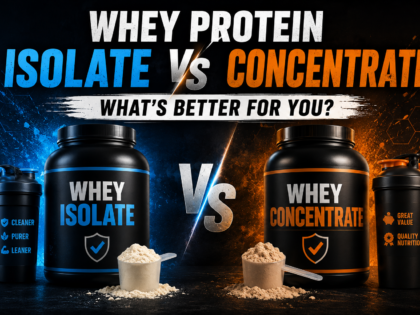
Whey Protein Isolate vs Concentrate: Which Is Better for You?
This is one of the most searched questions in sports nutrition, and the honest answer is: it depends on your goal and your stomach.
| Feature | Concentrate | Isolate |
|---|---|---|
| Protein % per serving | 70–80% | 90%+ |
| Fat content | Moderate | Very low |
| Lactose content | Moderate | Very low |
| Price | Lower | Higher |
| Absorption speed | Moderate | Fast |
| Taste | Richer | Lighter |
| Best for | Bulking, beginners | Cutting, lactose-sensitive |
The bottom line: If you’re healthy, have no digestive issues, and are trying to build muscle without overthinking your diet, concentrate is perfectly fine and considerably more affordable. If you’re trying to stay lean, have mild lactose issues, or simply want the cleanest possible protein source, isolate is worth the extra cost.
Which Whey Protein Is Best for Beginners?
For someone just starting out in the gym, the best whey protein is the one that:
- Is from a verified, authentic brand – fake supplements are rampant in India, and beginners often can’t tell the difference
- Has a clear, simple ingredient list – avoid products with dozens of additives, mystery “proprietary blends,” or very low protein per serving
- Is a concentrate or isolate – skip hydrolysate for now; it’s expensive and the benefit at a beginner level is marginal
- Fits your budget – consistency matters more than premium pricing
A reputable product like GNC Pro Performance 100% Whey Protein is a solid starting point – it’s from a well-established brand, delivers reliable protein content per serving, and is widely available from trusted suppliers.
As a beginner, resist the temptation to buy whatever is cheapest or whatever your gym’s local supplement dealer is pushing. Prioritise authenticity above everything else.
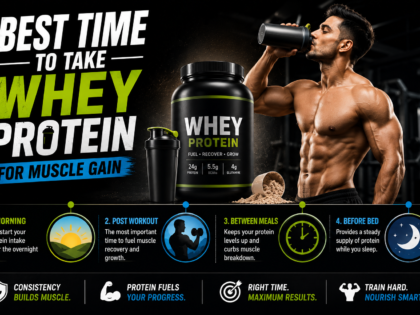
Best Time to Take Whey Protein for Maximum Benefit
Timing matters, but not as much as total daily protein intake does. Let’s clear that up first: if you’re consistently hitting your protein targets across the day, you will see results. Timing is a secondary variable.
That said, here’s a practical guide to when whey protein fits best:
Post-Workout (Most Recommended)
The post-workout window, roughly 30 to 90 minutes after training, is when your muscles are primed for nutrient uptake. Consuming 25–30g of whey protein during this time supports muscle repair and growth. This is the most evidence-backed timing recommendation for whey protein specifically, given its fast absorption rate.
Morning (Especially on Rest Days)
After 7–8 hours of sleep (which is essentially a fasting period), your body wakes up in a slightly catabolic state. A morning protein shake can help kickstart muscle protein synthesis and set a strong protein baseline for the rest of the day.
Between Meals
If your meals are spread far apart or your diet doesn’t include enough protein-rich foods, a mid-morning or afternoon shake can help you stay on track without overeating at mealtimes.
Before Bed?
This is where casein protein — the slow-digesting cousin of whey — is actually more appropriate. Whey is absorbed too quickly to provide the steady overnight amino acid release your muscles benefit from during sleep. If pre-bed protein is your goal, casein or a high-protein food like Greek yoghurt or cottage cheese is a better fit.
Quick Summary:
| Timing | Benefit |
|---|---|
| Post-workout | Muscle repair and growth |
| Morning | Break overnight fast, kickstart MPS |
| Between meals | Hit daily protein targets |
| Pre-bed | Not ideal; casein is better here |
How Much Protein Do You Really Need Daily?
This is a question that genuinely confuses a lot of people — partly because the recommendations vary depending on who you ask.
Here’s where current sports nutrition research lands:
- Sedentary adults: ~0.8g per kg of bodyweight per day (this is the basic survival number, not a performance number)
- Recreational gym-goers: 1.4–1.7g per kg of bodyweight per day
- Serious athletes building muscle: 1.6–2.2g per kg of bodyweight per day
- People cutting calories while training: Up to 2.4g per kg per day to prevent muscle loss
Practical example: A 75kg Indian male training 4–5 days a week should aim for roughly 112–165g of protein per day depending on his goals.
Getting all of that from food is doable but requires planning. A standard Indian diet — even with dal, paneer, eggs, and chicken — often falls short of this range. That’s where a whey protein supplement fills the gap practically and efficiently.
A note on excess protein: Contrary to popular belief, high protein intake does not damage healthy kidneys. This myth has been studied extensively and repeatedly found to be false in people with normal kidney function. If you have a pre-existing kidney condition, consult your doctor — but for healthy individuals, protein above the RDA is well-tolerated and beneficial.
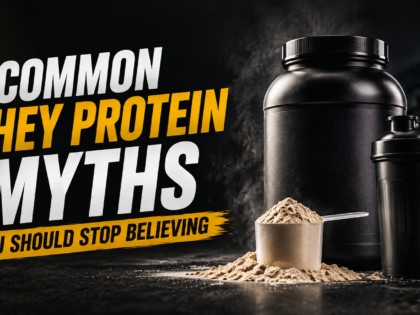
Common Whey Protein Myths — Busted
There’s a remarkable amount of misinformation around protein supplements in India. Let’s set the record straight.
Myth 1: “Whey Protein is a Steroid”
Fact: Whey protein is a food product derived from milk. It contains no hormones, steroids, or banned substances (in genuine, certified products). Calling it a steroid is the nutritional equivalent of calling your omelette a performance-enhancing drug.
Myth 2: “It Will Make You Bulky Overnight”
Fact: Building significant muscle is a slow, difficult process that takes months and years of consistent training and eating. A scoop of protein powder does not magically inflate your muscles. Women, in particular, often fear protein supplements unnecessarily — but without the testosterone levels men have, significant bulk is simply not a realistic concern.
Myth 3: “You Must Take It Immediately After the Gym or It Won’t Work”
Fact: The so-called “anabolic window” is much wider than the fitness industry suggests. Research shows that as long as you consume adequate protein within a few hours of training, timing down to the minute is irrelevant for most people.
Myth 4: “Natural Food Is Always Better Than Supplements”
Fact: Whey protein IS natural food — it’s derived from milk. Supplements are not replacements for whole foods, but they’re not inferior to them either. They’re a practical tool. If your diet is solid and you’re just using a supplement to hit protein targets, that’s smart nutrition — not corner-cutting.
Myth 5: “Whey Protein Causes Hair Loss”
Fact: There is no credible scientific evidence linking whey protein directly to hair loss. This myth likely stems from confusion with anabolic steroids or from rare cases involving other ingredients (like creatine’s potential DHT-raising effect, which itself is not definitively proven). Standard whey protein does not cause hair loss.
Myth 6: “Cheap Protein Is Just as Good”
Fact: This one can be genuinely dangerous. The Indian supplement market has significant issues with adulterated and counterfeit products. Some cheaper “whey proteins” have been found to contain harmful fillers, inflated amino acid profiles (amino spiking), or far less actual protein than labelled. This is not a space to bargain-hunt without doing your research.
How to Identify Authentic Whey Protein in India
This deserves serious attention. India has a real problem with counterfeit supplements — and it’s not always obvious at a glance.
Here’s how to protect yourself:
1. Buy From Authorised Sellers Only
Always purchase from verified supplement retailers or the brand’s official website. Avoid third-party sellers on platforms where verification is lax. Trusted supplement stores like Kapoor Medical Hall that stock verified products are the safest option for Indian buyers.
2. Check for Hologram Seals and QR Codes
Most reputable brands — including GNC, Optimum Nutrition, MuscleBlaze, and others — include tamper-evident seals, holographic stickers, or QR codes that can be verified through the brand’s official website or app. Always check these before opening.
3. Examine the Packaging Closely
Counterfeit products often have subtle differences: slightly off fonts, spelling errors, different shades of colour, or poor-quality printing. Compare against the brand’s official website imagery if you’re unsure.
4. Scrutinise the Nutritional Label
A legitimate whey protein should clearly list: protein per serving, fat, carbohydrates, the amino acid profile, and serving size. If a product shows suspiciously high protein numbers (like 30g of protein from a 32g scoop), question it — that’s barely any room for flavouring, fillers, or anything else. It could be amino spiked.
5. Be Sceptical of Too-Good-To-Be-True Pricing
If a brand’s 2kg tub is selling for ₹800 when the same product retails for ₹3,500 officially, something is wrong. Counterfeit products often use price as the primary lure.
Mistakes Beginners Make When Buying Protein
Beyond authenticity issues, here are common buying mistakes that cost beginners time, money, and results:
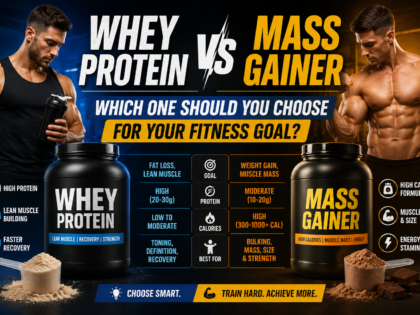
Buying a mass gainer when they don’t need one. Many beginners mistake mass gainers for whey protein. Mass gainers contain 600–1,200 calories per serving and are designed for hardgainers trying to put on significant weight. If you’re of average build and just want to get leaner and more muscular, a standard whey protein is more appropriate.
Choosing flavour over formulation. Taste matters — you have to drink this stuff daily — but don’t let a great-sounding “Gulab Jamun” flavour distract you from poor protein content per serving.
Expecting results without training hard. Protein supplements support training. They do not replace it. If your workout is inconsistent or low-effort, no supplement will fix that.
Ignoring overall diet. Protein powder is a supplement — it supplements a diet, not replaces it. Your foundation should be real food: eggs, chicken, paneer, dal, fish, curd. The shake fills gaps.
Buying whatever your gym trainer recommends without checking. Many gym trainers earn commissions on supplement sales. Some recommend products based on margin, not merit. Always cross-reference.
Top Supplements for Lean Muscle Growth (Beyond Whey)
If you’ve got your protein sorted and you’re training consistently, these are the supplements most worth considering next — backed by solid research:
Creatine Monohydrate
The most studied sports supplement in existence. Creatine increases your muscles’ capacity to produce energy (ATP) during high-intensity exercise, allowing you to lift heavier and recover faster. It causes a slight increase in water retention within muscle cells, which can add 1–2kg in the first week — but this is intramuscular water, not body fat. Dose: 3–5g daily.
Caffeine (Pre-workout)
Caffeine is one of the most effective ergogenic (performance-enhancing) aids available. It improves focus, endurance, and power output. You can get it from coffee or a pre-workout supplement. Dose: 3–6mg per kg of bodyweight before training.
Omega-3 Fatty Acids (Fish Oil)
Omega-3s support joint health, reduce inflammation from training, and may modestly support muscle protein synthesis. Particularly valuable if your diet is low in fatty fish. Dose: 2–3g of combined EPA/DHA daily.
Vitamin D3
A huge percentage of Indians are deficient in Vitamin D — largely due to lifestyle changes despite living in a sunny country. Vitamin D plays a role in testosterone levels, immune function, bone health, and muscle function. Dose: 1,000–2,000 IU daily, or as advised by a doctor.
Multivitamins
A good multivitamin covers micronutrient gaps in an imperfect diet. Not a replacement for whole foods, but a practical insurance policy for active individuals.
Whey Protein Side Effects & Safety
Whey protein is extraordinarily safe for healthy individuals. But like anything, it’s not completely without considerations.
Digestive discomfort: The most common complaint. If you’re lactose-sensitive, whey concentrate — which contains more lactose — can cause bloating, gas, or loose stools. Switching to a whey isolate (very low lactose) usually resolves this.
Calorie surplus: If you’re drinking protein shakes on top of an already high-calorie diet without adjusting, you can gain fat. Protein shakes are not calorie-free — account for them in your daily intake.
Allergies: If you have a milk protein allergy (different from lactose intolerance — this is an immune response to milk proteins themselves), whey is not suitable for you. Plant-based proteins like pea or soy are better alternatives in this case.
Kidney concerns: As discussed earlier — not a real concern for people with healthy kidneys. This myth is outdated and has been thoroughly disproved in sports nutrition research.
Drug interactions: Whey protein doesn’t meaningfully interact with most medications. If you’re on prescription medication, a quick check with your doctor is always sensible — but this applies to any dietary change, not specifically to protein powder.
Final Whey Protein Buying Checklist
Before you click “buy” on your next tub of whey protein, run through this checklist:
- [ ] Verified seller? Buy from authorised retailers only
- [ ] Brand reputation? Stick to established brands with a track record
- [ ] Protein per serving? Look for at least 22g per 30g scoop (70%+ protein content)
- [ ] Ingredient list? Short and transparent — avoid proprietary blends
- [ ] Type matches your goal? Concentrate for muscle building, isolate for fat loss/lactose issues
- [ ] Price makes sense? Suspiciously cheap = likely fake
- [ ] Hologram/QR check? Verify authenticity before consuming
- [ ] Allergens checked? Milk-based protein — check if relevant
5. INTERNAL LINKING SUGGESTIONS
These are natural anchor text opportunities to link to future cluster blogs from within this pillar article:
| Anchor Text | Link To (Future Cluster Blog) |
|---|---|
| “whey protein isolate vs concentrate” | /whey-protein-isolate-vs-concentrate |
| “best time to take whey protein” | /best-time-to-take-whey-protein |
| “common whey protein myths” | /whey-protein-myths-busted |
| “how much protein do you need daily” | /how-much-protein-per-day |
| “buying authentic whey protein in India” | /how-to-buy-authentic-whey-protein-india |
| “top supplements for lean muscle growth” | /supplements-for-lean-muscle-growth |
| “mass gainers” | https://kapoormedicalhall.com/product-category/mass-gainers/ |
| “whey protein range” | https://kapoormedicalhall.com/product-category/whey-protein/ |
| “GNC Pro Performance 100% Whey Protein” | https://kapoormedicalhall.com/product/gnc-pro-performance-100-whey-protein/ |
Frequently Asked Questions About Whey Protein
Q1. Is whey protein safe for daily use?
Yes. Whey protein is a food-derived supplement that is safe for healthy individuals to consume daily. It is one of the most thoroughly researched supplements in existence. Stick to recommended serving sizes and ensure your overall diet is balanced.
Q2. Can beginners take whey protein?
Absolutely. Whey protein is suitable for people at all fitness levels. Beginners often benefit the most from it, as getting adequate protein while establishing a training routine can be challenging through food alone.
Q3. Which is better — whey isolate or concentrate?
It depends on your goal. Concentrate is more affordable and works well for muscle building. Isolate is leaner, lower in lactose, and better suited for fat loss or those with mild lactose sensitivity. Both are effective when total daily protein intake is adequate.
Q4. Can women take whey protein?
Yes, and they absolutely should if they’re training. Women have the same protein requirements per kg of bodyweight as men when training.
Whey protein will not make women “bulky”; muscle gain at that level requires years of dedicated training and specific hormonal conditions that women don’t have to the same degree as men.
Q5. How many scoops of whey protein per day is safe?
Most people do well with 1–2 scoops per day, which covers 25–55g of additional protein. The goal is to meet — not dramatically exceed — your daily protein targets. More than 2 scoops rarely adds meaningful benefit and just adds unnecessary calories.
Q6. Can I take whey protein without working out?
You can, but it’s not particularly purposeful. Protein will be used as energy or stored if your body doesn’t have a reason (like muscle repair from training) to use it for muscle building. Save your supplement budget for when you’re also putting in the training.
Q7. Is Indian whey protein as good as imported brands?
Some Indian brands like MuscleBlaze have strong quality control and third-party testing. International brands like GNC, Optimum Nutrition, and MyProtein are established and trusted. The key is authenticity — a genuine Indian brand beats a counterfeit international one every time.
Q8. Will whey protein cause acne?
Some people do report acne when starting whey protein, possibly due to insulin spiking from fast-digesting protein or sensitivity to dairy. If you notice breakouts, switching to an isolate or a plant-based protein can help identify whether whey is the trigger.
Q9. How do I know if my whey protein is fake?
Check for holograms, QR codes, and buy only from authorised sellers. Compare packaging with official brand images. Be sceptical of very low pricing. Read the nutrition label carefully — inconsistencies in protein-per-serving math can indicate amino spiking or adulteration.
Q10. Can vegetarians take whey protein?
Yes. Whey protein is derived from milk and is suitable for lacto-vegetarians. It is not vegan. If you’re vegan, plant-based protein alternatives like pea protein or brown rice protein are the appropriate choices.
Q11. Does whey protein expire?
Yes. Check the manufacturing and expiry dates before buying. Consuming expired protein powder isn’t typically dangerous (it won’t make you sick) but the protein may have degraded and the taste can be off. Store in a cool, dry place, sealed properly.
Q12. What should I mix whey protein with?
Water is the simplest and lowest-calorie option. Whole milk adds calories, fat, and casein protein (which slows absorption slightly but improves taste significantly). Plant-based milks work well too. You can also blend it into smoothies, mix it into oats, or use it in baking.
Whey protein, when used correctly, is genuinely one of the most effective, safe, and practical tools in a fitness-conscious person’s nutritional toolkit. It’s not magic, it’s not a steroid, and it certainly isn’t necessary for everyone — but for the vast majority of people training consistently and trying to build muscle, lose fat, or simply recover better, it delivers real, measurable results.
The key is buying smart. In a market flooded with counterfeits and misleading labels, the single most important decision you’ll make isn’t which flavour to choose — it’s where you buy from.
Hence, At Kapoor Medical Hall, authenticity isn’t an afterthought. Every supplement on the shelf is sourced from verified distributors, so you know exactly what you’re getting. Whether you’re looking for a quality whey protein to start your journey, or exploring mass gainers for a serious bulking phase, you’ll find trusted products from brands that actually deliver on their labels.
Start with the right product. Train consistently. Eat well. The results follow.
Explore Our Whey Protein Range →